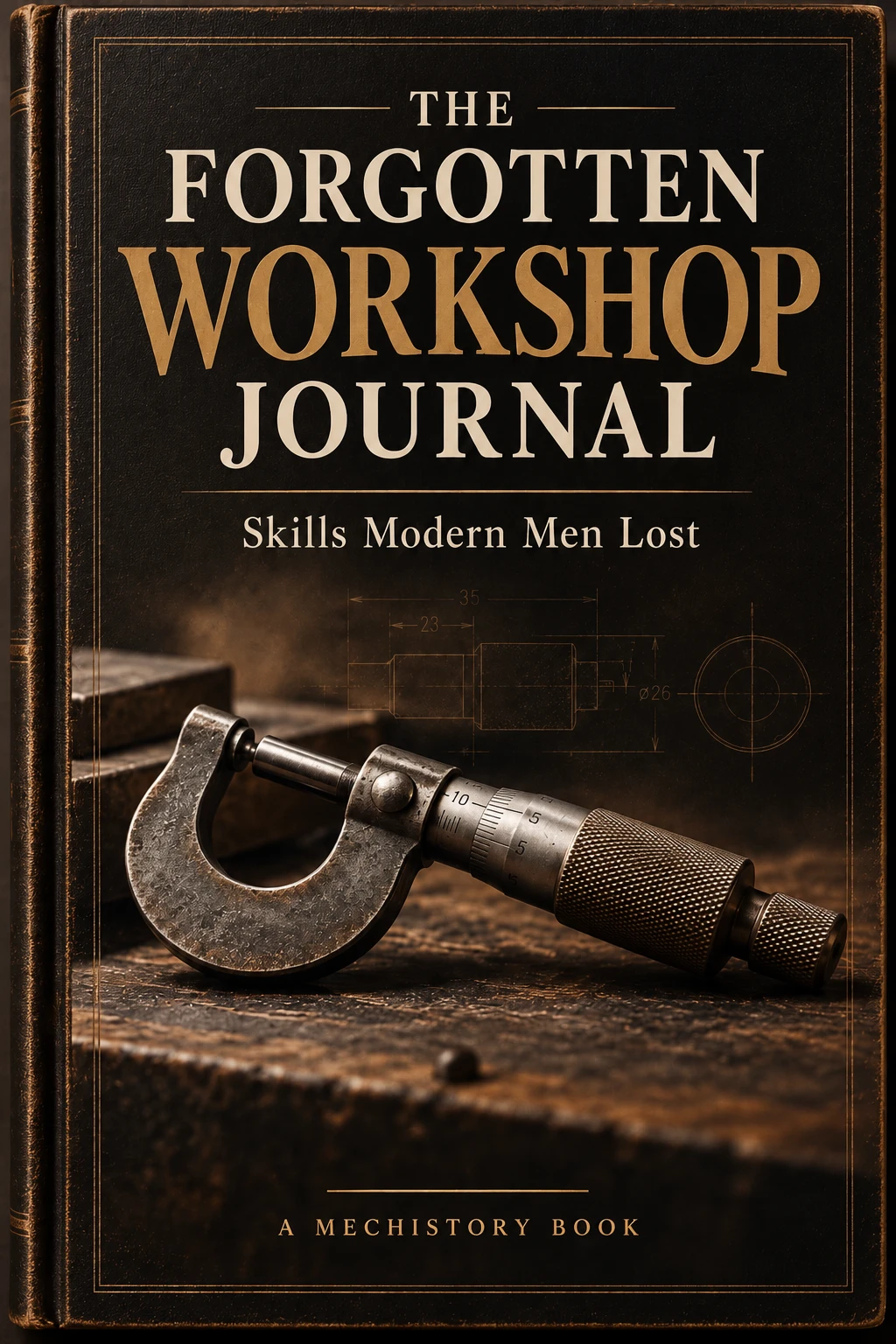
How the old machinists did it: feel, sound, measurement, sharpening and repair. All of it backed by real numbers.
The old hands knew a bolt was tight enough by feel. They could hear a bearing going bad and check flat without a machine.
None of it was written down. It passed elbow to elbow at the bench, and when the shops closed, most of it went with them.
This book writes it down: what they did, why they did it, and how you can do it yourself.
Flatness sounds like the simplest thing in the world until you try to check it. How do you measure flat against something flatter?
The answer has been the same for two hundred years: a surface plate, the truth everything else is checked against.
| Light straw | 400–430°F | Files |
| Dark straw | 460–490°F | Chisels |
| Brown | 500–520°F | Taps |
| Purple | 530–550°F | Cold chisels |
| Blue | 570–590°F | Springs |
Where the old ways were wrong, the book says so plainly.
No. Every skill starts from the basics.
As a reference, and as something to hand down to the next generation.
No. A bench, a vise and basic hand tools are enough for most of the book.
A PDF. Read it on any device or print it for the bench.
Yes. You can forward it or print it.
The Forgotten Workshop Journal: 193 pages, instant PDF.